
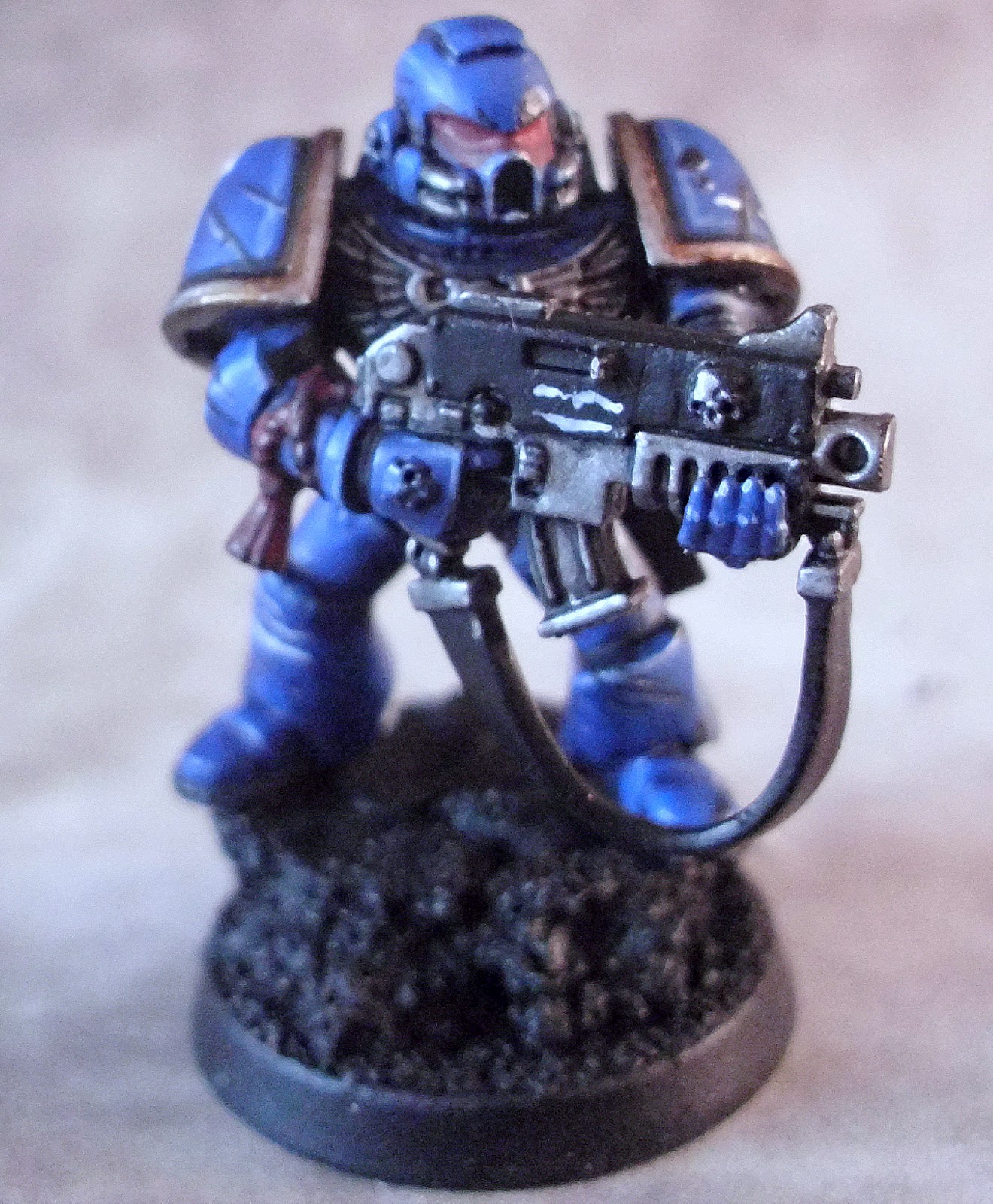
Hello all. Joe M. from Models Workshop here. I’m going to continue my discussion of getting started in the hobby with painting in mind. In Part 1 I covered what you will want to do to plan everything out. In Part 2 I covered what purchases you should make to get started. Now in Part 3 I will discuss putting together your test models.
Ok so now we got our test models in from GW so it’s time to get to painting right? Not yet. First we need to put them together. Now I know these are only test models and who really cares what they look like in the end, right? Well it does matter. Not because you want them to look good, but because you want to be able to apply the paint right and you also want to develop good habits.
So we will start with unboxing. I would do this right in the GW store if you ordered them to there (shipping is free when you do that so I would recommend that option. (Editor: I am a fan of FLGS myself, support them) The reason you are going to unbox in the store is so that you can verify a few things.
1. You want to be sure that all the pieces are there that are supposed to be there.
2. You want to make sure that none of the pieces are broken.
3. You want to verify the quality of the mold. This applies more to finecast and resin models but it still applies to plastic kits too. I have one Cryptek that I didn’t check that looks like half is face is melted.
The cool thing about doing this in a GW store is that they will accept a return on the spot for a model kit that was damaged or otherwise defective when you open it like that.
Your next step is to wash the model. This has been covered in detail in this article, Resin Washing Tutorial, and applies to plastic and finecast as well as resin. The reason for washing the model is to get rid of the oils, dirt, and chemicals that are on a model from production. Resin and Finecast have more of these impurities than plastic, but all models have them. (Editor: as the author of that article I full support washing everything like Joe says).
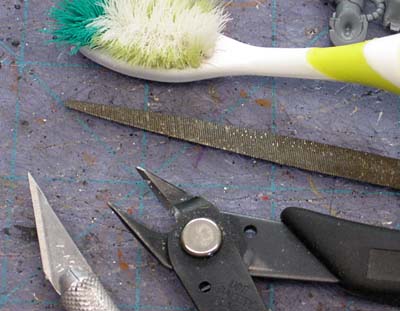
Now we will go ahead and start work on our model. Cut a piece of model from the sprue using your clippers. I would recommend the piece with the legs to start. Take the piece you have just cut and inspect it. Look for where the sprue was connected to the model and where the mold lines are. Now take your hobby knife or mold line remover. Place the blade against the model on the far side of what you want to remove. The blade should be at a 45 degree angle with the top of the blade facing towards you and the sharp side pointed away. Now, applying firm pressure without pressing the blade into the model, drag the blade toward you slowly. (Editor: please read this twice. The edge of blade will be going backward on the model. This is actually the method I have used for years and works great!) This will scrap away the unwanted sprue and mold lines. Do this until the area looks clean. Then take your fine grain sandpaper and smooth the area down. Some areas are harder to clean than others. For these you will have to use your files to get rid of the offending element.

Now glue the legs to the base. In the test models it doesn’t really matter but I would recommend using superglue to glue it to the plastic base. In future models you will want to do that so that the model is easier to remove from the plastic for basing or applying a resin base. The reason for doing the legs to the base first is for stability of the model and to give you a place to hold and work with. It also makes priming and painting much easier.
Now repeat the mold line removal process with the other pieces and glue them into place. I would use plastic glue for this. Once the model is entirely put together and dry check it again for mold lines. Remove any that you find. Then repeat all these steps for your other models. Your test models are now ready for priming and painting. I will cover these steps in part 4 of this series.